


Cybersecurity | Cybercriminals | News
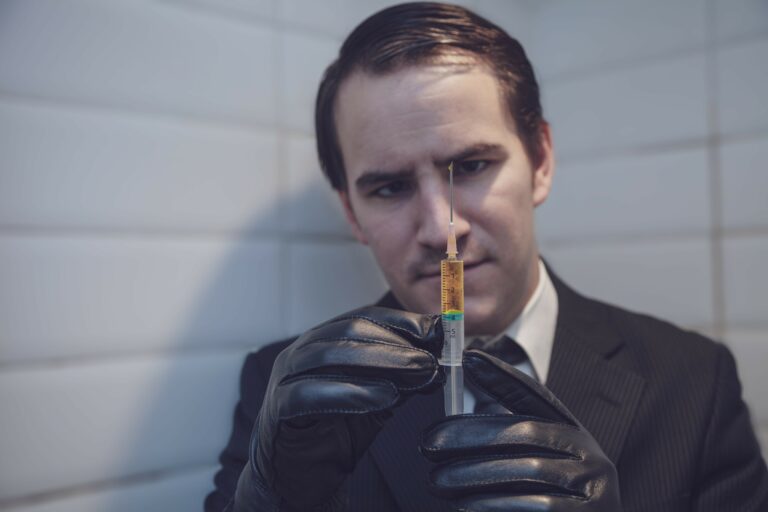
As soon as the first positive news about Corona vaccines arrived, the cybercriminals got ready to get started: Corona vaccinations as a hook for phishing attacks, espionage and sabotage of research results, attacks on supply chains and dubious offers of counterfeit vaccines on the darknet – the cybercriminals quickly instrumentalized the topic for themselves. How can they be stopped?
Since the beginning of the pandemic, “Corona” has been a popular topic for phishing campaigns. Ever since the first pharmaceutical companies reported their successes in producing a vaccine, phishers simply adapted the subject lines of the phishing emails to the current status quo. Now they are conducting their criminal social engineering with the hook “vaccinations” or “vaccination appointments”.
Direct attacks on vaccine manufacturers
In addition to these newly labeled phishing attacks, the number of direct attacks on vaccine manufacturers is also increasing:
BSI: Cybercriminals take advantage of general uncertainty
The German Federal Office for Information Security (BSI) and the French security agency ANSSI also presented a joint report on the cyber security situation in both countries shows that cybercriminals have reacted flexibly to the coronavirus pandemic and are deliberately exploiting the general uncertainty among companies and the population. The healthcare system in both countries faces the great challenge of fighting the pandemic and at the same time effectively arming itself against possible cyber attacks. This is because clinics, vaccine manufacturers and their supply chains are increasingly in the focus of cybercriminals. “Outages in these areas can have devastating consequences that we cannot afford, especially in the midst of a pandemic,” says the BSI. For this reason, the Federal Office is also in intensive talks with the Federal Government about the protection of the logistics chains for vaccines.
Supply chains and cooling systems in the sights
After widespread attempts to spy on research results, hackers are increasingly targeting these supply chains (in this case, cold chains): They are trying to disrupt supply chains, shut down cold stores, or penetrate supply systems. An example from Israel shows that IoT systems in particular are quite vulnerable here: There, hackers tried to drastically increase the chlorine content of public drinking water. Imagine if the hackers had direct access to vaccine production and changed the respective proportions of the active ingredients. Even small changes to the formula can significantly impair its effectiveness. This could well end in a health catastrophe.
In addition to production, storage and the rather complex logistics are also possible points of attack. Attackers could target the corresponding temperature control systems and manipulate the storage temperature. This would greatly reduce the effectiveness of the vaccines. Logistics also offer enormous attack surfaces, for example for a ransomware attack on the scheduling software, which could lead to delays in delivery and affect the schedule for the distribution of vaccines. In addition, storage rooms could no longer be accessible and transport routes could fail.
Offers of fake vaccines on the darknet
The offers of vaccines have also multiplied on the darknet: There, vaccine doses of the Biontec/Pfizer Vaccin were offered for 250 euros per dose. Europol is also observing a massive increase in advertising for Covid 19 vaccines by 400 percent. Prices also rose significantly again in January to 400 to 1,000 euros per dose. In addition, individual doses are no longer sold alone, but packages with several vaccine doses.
Continued high risk of targeted attacks
Accordingly, the BSI also estimates the threat situation of German pharmaceutical companies and vaccine manufacturers to be high. BSI President Schönbohm told Deutsche Welle: “There is still a risk of targeted attacks against research institutions. Companies must also do their part, for example by investing appropriately in information security.”
Organizations can take a few steps that provide immediate protection:
Surely many of your employees are also interested in a vaccination appointment soon. This may make it all the easier to open an e-mail that suggests that it contains up-to-date information. For this reason, Perseus recommends that all companies sensitize their employees to the topic as quickly as possible through appropriate training, e.g. with simulated phishing attacks.
Please feel free to contact us: 030/95 999 80 80 (Mon – Fri 09:00-18:00 with the exception of public holidays) or by e-mail to info@perseus.de.
Cyber security | Cybercriminals | Latest news
No sooner had the first positive news about coronavirus vaccines emerged than cybercriminals were already gearing up: coronavirus vaccinations as a hook for phishing attacks, espionage and sabotage of research results, attacks on supply chains and dubious offers of fake vaccines on the darknet – cybercriminals were quick to exploit the topic. How can they be stopped?
Since the beginning of the pandemic, coronavirus has been a popular topic for phishing campaigns. As soon as the first pharmaceutical companies reported their successes in producing a vaccine, phishers simply adapted the subject lines of their phishing emails to reflect the current status quo. Now they are carrying out their criminal social engineering with the hook ‘vaccinations’ or ‘vaccination appointments’.
Direct attacks on vaccine manufacturers
In addition to these newly labelled phishing attacks, the number of direct attacks on vaccine manufacturers is also increasing:
BSI: Cybercriminals exploit general uncertainty
In a joint report on the cyber security situation in both countries, the German Federal Office for Information Security (BSI) and the French security agency ANSSI also noted that cybercriminals have responded flexibly to the coronavirus pandemic and are deliberately exploiting the general uncertainty among companies and the population. The healthcare systems in both countries face the major challenge of combating the pandemic while at the same time effectively arming themselves against possible cyber attacks. This is because clinics, vaccine manufacturers and their supply chains are increasingly becoming the focus of cybercriminals. ‘Failures in these areas can have devastating consequences that we cannot afford, especially in the midst of a pandemic,’ said the BSI. The Federal Office is therefore in intensive discussions with the German government about protecting the logistics chains for vaccines.
Supply chains and cooling systems in the crosshairs
Following widespread attempts to spy on research results, hackers are increasingly targeting these supply chains (in this case, the cold chains): They are trying to disrupt supply chains, shut down cold storage facilities or penetrate supply systems. An example from Israel shows that IoT systems are particularly vulnerable here: hackers attempted to drastically increase the chlorine content of the public drinking water. Imagine if hackers had direct access to vaccine production and altered the respective proportions of the active ingredients. Even small changes to the formula can significantly impair effectiveness. This could well end in a health disaster.
In addition to production, storage and the rather complex logistics also represent potential points of attack. Attackers could target the relevant temperature control systems and manipulate the storage temperature. This would greatly reduce the effectiveness of the vaccines. Logistics also offers enormous opportunities for attack, for example, a ransomware attack on the scheduling software, which could lead to delays in delivery and affect the timetable for vaccine distribution. In addition, storage facilities could become inaccessible and transport routes could be disrupted.
Offers of fake vaccines on the darknet
Offers of vaccines have also multiplied on the darknet, where doses of the Biontec/Pfizer vaccine were offered for 250 euros per dose. Europol has also observed a massive 400 percent increase in advertising for COVID-19 vaccines. Prices also rose significantly again in January to between 400 and 1,000 euros per dose. In addition, individual doses are no longer being sold separately, but in packages containing several vaccine doses.
Continued high risk of targeted attacks
Accordingly, the BSI also assesses the threat situation for German pharmaceutical companies and vaccine manufacturers as high. BSI President Schönbohm told Deutsche Welle: ‘There is still a risk of targeted attacks against research institutions. Companies must also do their part, for example by investing appropriately in information security.’
Companies can take a number of measures to provide immediate protection:
Many of your employees are probably interested in getting vaccinated as soon as possible. This may make them more likely to open an email that suggests it contains the latest information on the subject. For this reason, Perseus recommends that all companies raise awareness of this issue among their employees as soon as possible through appropriate training, e.g. with simulated phishing attacks.
Please feel free to contact us on 030/95 999 80 80 (Mon–Fri 9 a.m.–6 p.m., except public holidays) or by email at info@perseus.de.


