





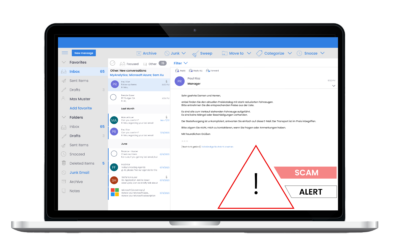
 It all started seemingly harmlessly: employees of car dealers received routine emails from a well-known car rental company that offered cars for sale to car dealers at low prices – in some cases even at generous discounts. This is a common practice in the automotive industry. The employees trusted the legality of the e-mails, corresponded with the senders and finally received definitive offers to buy the vehicles.
In the further course of the correspondence, everything went according to the usual business processes. Employees received authentic-looking emails and documents, including invoices in the design of the car rental. All the information in the emails matched the original data of the car rental company, except for a slightly modified domain.
Believing in the authenticity of the communication, the employees carried out the transactions and paid large amounts for the vehicles as instructed. Over time, however, doubts arose among the employees. Despite payments made, they did not receive registration certificates for the vehicles, which are usually handed out immediately after purchase. Worried, they contacted the supposed seller, the car rental company, only to find that there were no records of the transaction. The car dealerships had fallen for a scam.
The incident highlights the vulnerability of businesses to email and wire fraud and highlights the need for increased security measures and closer scrutiny of email communications. The Perseus team of experts recommended that the affected car dealerships file criminal charges in order to be able to take further legal action against the perpetrator. A suitable point of contact is the “Central Contact Point for Computer Crime”. It is a specialized agency that has experience in dealing with cybercrime cases.
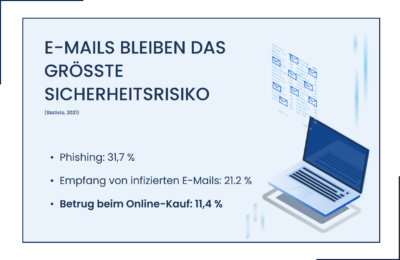 In addition, the client was advised to specifically raise awareness of cyber threats among its employees, specifically how to identify and mitigate the risks associated with email and financial fraud.
The policyholder was also strongly advised to revise the purchase process and the business transaction. Further verification steps, such as telephone confirmation directly with the seller’s parent company, should be set up to confirm the legitimacy of transactions and prevent similar incidents in the future. In particular, the IBAN should be cross-checked in order to easily uncover fraud.
By taking active measures such as reporting the incident, investing in employee training, and streamlining the buying process, companies can strengthen their protection against email and wire fraud.
The present scenario is by no means limited to the automotive industry. Similar tactics could be used in different industries with similar buying processes. Industries such as real estate, manufacturing, and wholesale often process transactions via email or bank transfer. The fraudulent techniques used in this case serve as a cautionary tale for companies in all industries that are vulnerable to fraudulent activity.