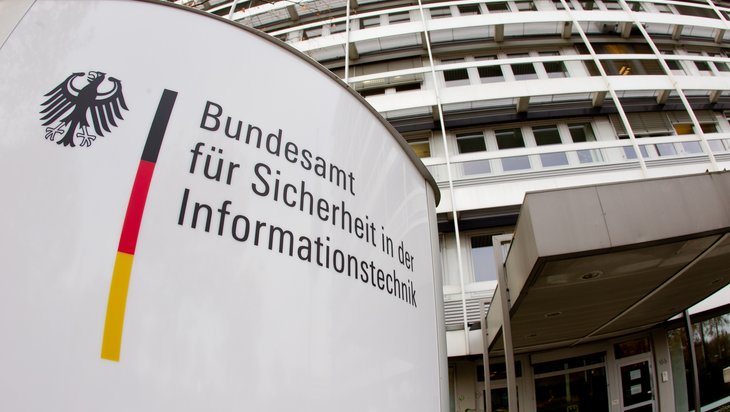
The current BSI report on the state of IT security in Germany paints a gloomy picture. The number of malicious programs is increasing dramatically fast.
Every day, the number of malware programs on the Internet grows by around 320,000. Within one year, 117.4 million new variants have been added. Overall, the number of malware programs now exceeds the billion mark.
These dramatic figures were announced by the BSI in its current “Report on the State of IT Security in Germany 2020”. Therefore, the cybersecurity situation is “tense at a very high level,” says Arne Schönbohm, President of the Federal Office for Information Security (BSI) – the federal cybersecurity agency.
All industries and company sizes affected
Companies and institutions of all sizes and industries were affected by ransomware attacks: automotive manufacturers and their suppliers, airports and airlines, administrations, hospitals, universities, but also small and medium-sized companies that distinguish themselves through the production of special components in mechanical engineering.
In Germany alone, around 15,000 patient data records were publicly accessible between July and September 2019. This included patient names, dates of birth, examination dates, information about treatment and high-resolution X-rays.
Covid and Home Office: Using the Digitalization Push for More Cyber Security
Even during the Corona pandemic, the threat of cyberattacks has not diminished, on the contrary: Since the lockdown at the beginning of March, almost one in five employees has been the victim of a cyberattack. Cybercriminals have changed their tactics over the course of the pandemic, following people home to their home offices. Now this is also a gateway for new forms of data theft.
The problem: Although the pandemic has given the economy a boost in digitalization, it has also increased the risk of cyberattacks. Cyber threats are increasing faster than most organizations’ ability to cope with them.
Attacks are becoming more intelligent and targeted
The appearance of the Emotet Trojan, currently the most dangerous malware in the world, marked a change in method last year: “Whereas in the past untargeted mass attacks on randomly hit targets were the means of choice, malware attacks are now becoming more and more intelligent and – through a cleverly combined use of different malware programs – more targeted,” according to the BSI cybersecurity experts. The harmful effect of this approach is immense.
Human insecurity factor as a gateway for cyber attacks
But it’s not just cybercriminals trying to access company data, customer data, and intellectual property from the outside. Your own employee can also prove to be a weak point in the safety net. Attackers are increasingly relying on the “human factor” as a gateway for attacks that work with social engineering methods and phishing and serve as a door opener for further attacks.
The BSI’s assessment of the potential danger coincides with our findings. Also read our new study on cybersecurity in Corona times.
Further information and examples are summarized in the “Report on the State of IT Security in Germany 2020“.